Fast Help • Tap to Call (301) 301-0324
Accident Recovery & Winch‑Out Services in Potomac MD
An accident does not always leave a vehicle sitting neatly on the shoulder.
A car may end up in a ditch, against a curb, off the roadway, down an embankment, stuck in soft ground, or positioned at an angle that makes an ordinary tow difficult. In those situations, recovery comes before transport.
Potomac Tow provides accident recovery and winch-out service in Potomac, MD for vehicles that need to be safely repositioned before they can be towed.
The job is not simply to attach a cable and pull.
A recovery operator has to consider where the vehicle is sitting, the direction it needs to move, what is around it, whether the wheels can roll, and how much force can be applied without making the situation worse.
Helping When Things Go Wrong
Accidents and off‑road mishaps can leave your vehicle stuck in mud, snow, a ditch or worse. Our accident recovery and winch‑out service safely extracts your car and transports it to your desired location. We use heavy‑duty winches, straps and skilled techniques to avoid further damage.
Why Choose Our Accident Recovery Service?
- Specialized Equipment: Heavy‑duty winches, wheel‑lift systems and flatbeds handle challenging situations. – Experienced Operators: Our technicians are trained in accident scene safety and recovery.
- Rapid Response: We arrive quickly to clear the roadway and get you to safety.
- Coordination with Authorities: We work with police and emergency responders to ensure a smooth recovery.

Signs You Need Accident Recovery or Winch‑Out
- Your vehicle slid off the road or into a ditch.
- You’ve been in an accident and need professional recovery.
- Your car is stuck in mud, snow, sand or another unstable surface.
- Off‑road driving left your vehicle high‑centered or bogged down.

Our Recovery Process
- Scene Assessment: We evaluate the scene for safety hazards.
- Stabilisation: We secure the vehicle to prevent further movement.
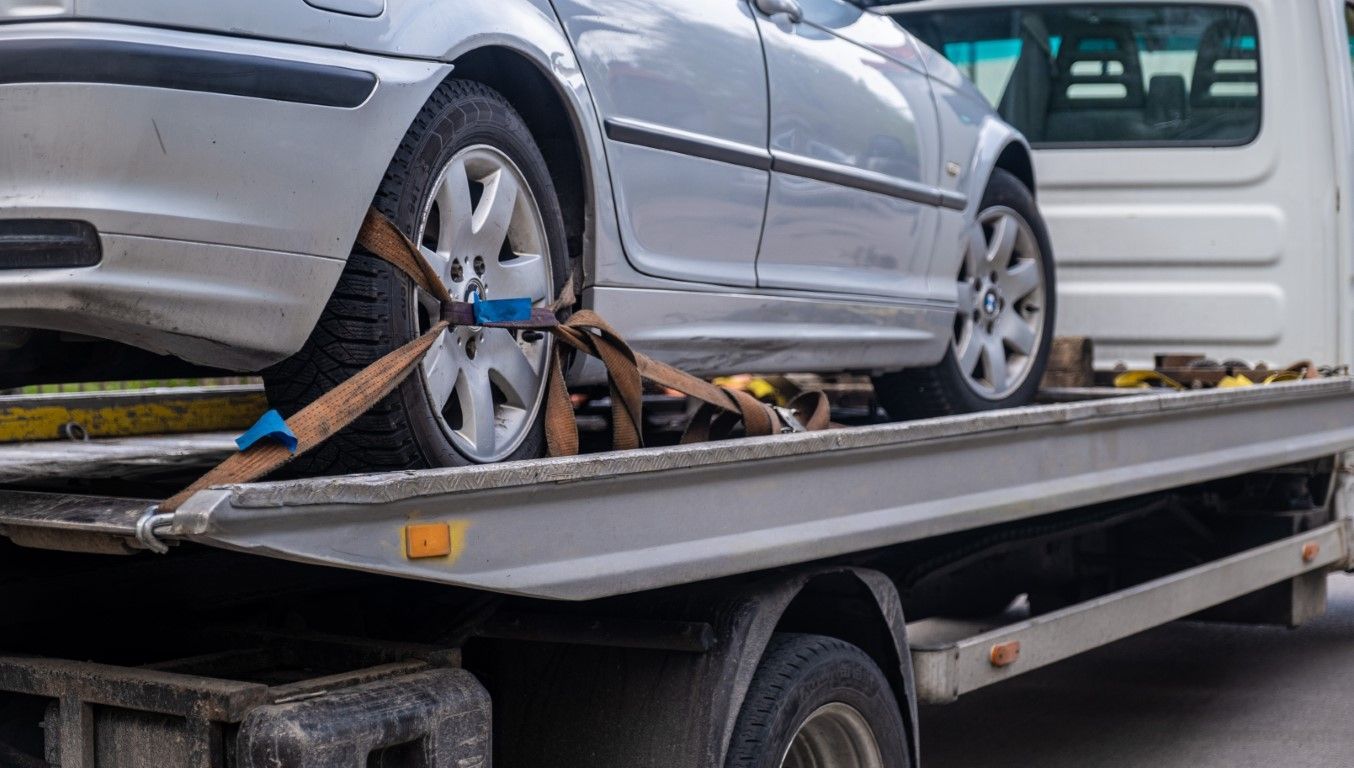
- Winch & Lift: We use winches, straps and wheel‑lift equipment to gently extract the vehicle.
- Transport: Once recovered, we transport your vehicle to a repair shop or safe location.
When a Vehicle Needs Recovery Instead of a Standard Tow
A standard tow generally assumes the vehicle can be loaded from a relatively accessible position.
Recovery becomes more complicated when the vehicle is:
- Off the pavement
- In a ditch
- Stuck in mud
- On a slope
- Against a barrier
- Partially blocked
- Unable to roll normally
- Difficult to reach from the road
- Positioned after a collision
- Trapped in a location where a tow truck cannot simply back up to it
In these cases, the first task may be getting the vehicle back to a safe loading position.
Accident Scenes Can Be Unpredictable
Two collisions can look similar but require completely different recovery plans.
A front-end-damaged vehicle sitting on level pavement may be relatively straightforward to load.
A vehicle with damaged wheels sitting several feet off the roadway is a different problem.
Recovery planning may involve:
- Vehicle position
- Road conditions
- Wheel and suspension damage
- Available access
- Nearby traffic
- Obstacles
- Terrain
- Direction of pull
- Attachment points
- Type of towing equipment needed
The safest approach is based on the actual scene rather than trying to force every accident into the same towing method.
What Is a Winch-Out?
A winch-out uses controlled pulling force to move a stuck or disabled vehicle.
A winch can be useful when the vehicle cannot drive itself out of its current position.
Common examples include:
- Tires stuck in mud
- Vehicle off the road
- Car in a shallow ditch
- Vehicle unable to climb a slope
- Collision vehicle that needs repositioning
- Car blocked by terrain
The amount of recovery work depends on how deeply the vehicle is stuck and whether it can roll once movement begins.
Why Angle Matters During Recovery
A vehicle should not simply be pulled in whatever direction seems easiest.
The angle of recovery can affect:
- Stability
- Vehicle movement
- Surrounding obstacles
- Stress on the vehicle
- How the tires or damaged suspension react
- Whether the vehicle can be loaded afterward
Sometimes the most direct path is not the best recovery path.
The operator may need to reposition the truck or adjust the recovery setup before moving the vehicle.
What to Do After an Accident
If you have just been involved in a crash, your first concern is personal safety.
If possible and safe to do so:
- Move away from active traffic
- Follow instructions from police or emergency responders
- Do not stand between damaged vehicles
- Avoid attempting to move a severely damaged vehicle yourself
- Tell the towing provider where the vehicle is located
- Explain whether it is in a ditch, blocked, overturned, or otherwise difficult to reach
- Mention visible wheel or suspension damage
- Provide the destination if one has already been selected
The more accurately the situation is described, the easier it is to understand what type of recovery may be needed.
Can a Damaged Vehicle Still Be Towed?
Usually, the key question is not whether the vehicle runs.
It is whether it can be safely loaded and transported.
A collision vehicle may have:
- Flat or damaged tires
- Broken suspension
- Locked wheels
- Body panels rubbing against tires
- Steering damage
- Fluid leaks
- Detached parts
- Severe alignment problems
Those conditions influence how the vehicle should be moved.
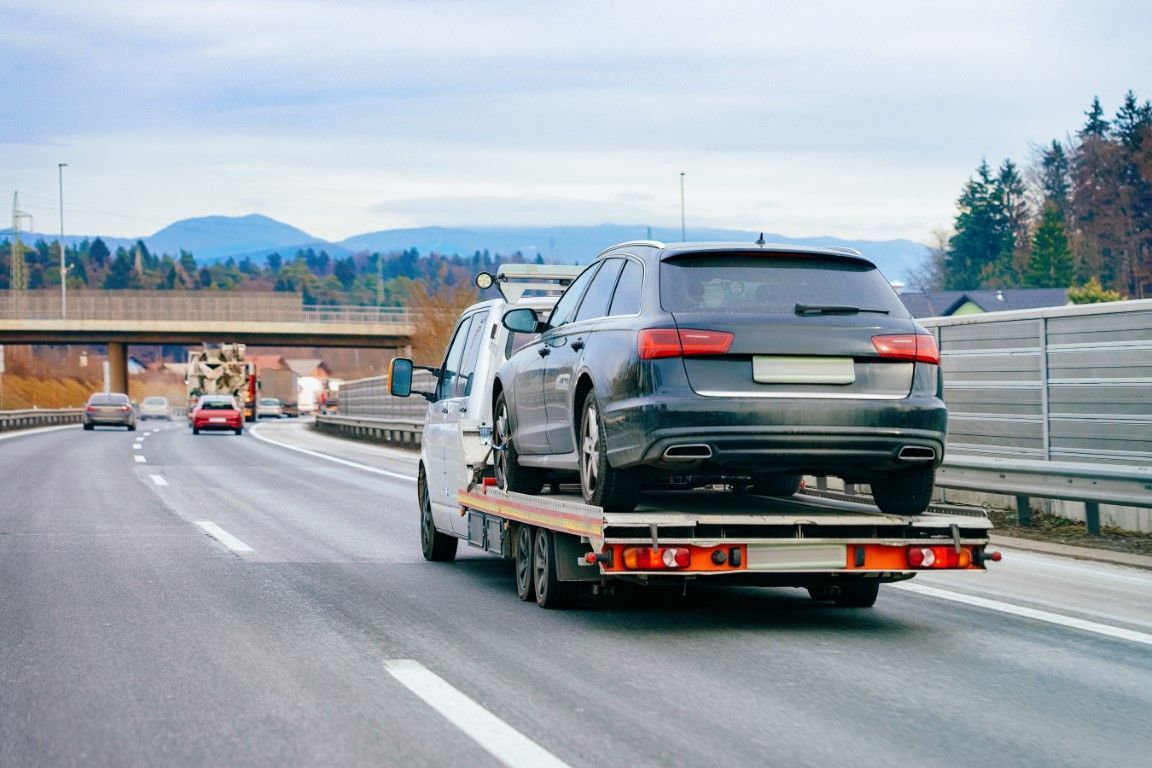
In many cases, a flatbed tow may be considered once the vehicle has been recovered into an accessible position.
Winch-Out for Mud, Grass and Soft Ground
Not every recovery begins with a collision.
A vehicle can become stuck when the drive wheels lose traction on:
- Mud
- Wet grass
- Loose soil
- Soft shoulders
- Uneven ground
Pressing the accelerator harder can sometimes dig the tires deeper.
If the vehicle is no longer able to move under its own power, a controlled winch-out may be a better approach than repeatedly spinning the wheels.
Recovery Around Curbs and Roadside Obstacles
A vehicle does not have to be far from the road to become difficult to tow.
A collision may leave it:
- Up against a curb
- Near a guardrail
- Against another vehicle
- In a landscaped area
- Beside a barrier
- Facing the wrong direction for easy loading
These situations can require careful repositioning before transport.
Accident Recovery and Flatbed Towing
Recovery and towing are often two parts of the same job.
First, the vehicle may need to be winched or repositioned.
Then it must be transported to:
- A repair shop
- Body shop
- Storage location
- Dealership
- Another approved destination
Our flatbed and long-distance towing service can be useful when the damaged vehicle needs to be carried rather than towed with wheels remaining on the roadway.
How Much Does Accident Recovery Cost?
Recovery pricing depends heavily on how difficult the vehicle is to access and move.
Factors can include:
- Vehicle size
- Accident location
- Distance off the road
- Terrain
- Position of the vehicle
- Number of disabled wheels
- Recovery equipment needed
- Amount of winching required
- Roadside access
- Destination
- Time required on scene
A simple pull from a soft shoulder is not the same recovery job as a heavily damaged vehicle positioned far from the road.
Mistakes to Avoid After a Vehicle Gets Stuck
Spinning the Tires Repeatedly
This can dig the vehicle deeper into mud or loose ground.
Attaching a Strap to a Random Vehicle Part
Not every part of a car is designed to handle recovery force.
Standing Near a Tensioned Cable
Recovery equipment under tension should be treated seriously.
Trying to Drive a Collision-Damaged Vehicle
Damage may not be limited to what can be seen from outside.
Calling for a Basic Tow Without Explaining the Situation
If the vehicle is in a ditch or inaccessible, tell the towing provider before dispatch so the recovery requirements are clear.
Accident Recovery & Winch-Out FAQs
Can you pull a car out of a ditch?
Yes, depending on access, vehicle position, terrain, and the recovery setup required.
What if the wheels are damaged after the accident?
Damaged wheels can affect how the vehicle is recovered and loaded. Explain any visible wheel or suspension damage when requesting service.
Do I need a flatbed after an accident?
A flatbed may be appropriate for many damaged vehicles, but the best towing method depends on the condition of the vehicle.
Can you recover a car stuck in mud?
Winch-out service can be used for many vehicles that have lost traction and cannot return to a drivable surface on their own.
What information should I give the tow company?
Provide your location, vehicle type, where the vehicle is positioned, whether it can roll, visible damage, and the destination if known.
Will accident recovery damage my vehicle?
Recovery always depends on the condition and position of the vehicle. The goal is to move it in a controlled manner while avoiding unnecessary additional damage.
Is winch-out service only for accidents?
No. Winching may also be used for vehicles stuck in mud, grass, ditches, and other difficult locations.
Get the Vehicle Out Safely
If your vehicle is stuck, off the roadway, or difficult to reach after a collision, contact Potomac Tow for accident recovery and winch-out service in Potomac, MD.
Explain where the vehicle is sitting and what happened so the recovery can be approached with the right equipment and plan.